The RBA Warns Inflation Could Stay High: What It Means for Australian Borrowers
Waiting for interest rates to fall? The RBA says inflation could remain high for some time.
Many Australian borrowers have been watching interest rates closely, hoping meaningful rate relief may be just around the corner.
However, the Reserve Bank of Australia’s latest message suggests inflation may remain higher than expected for some time.
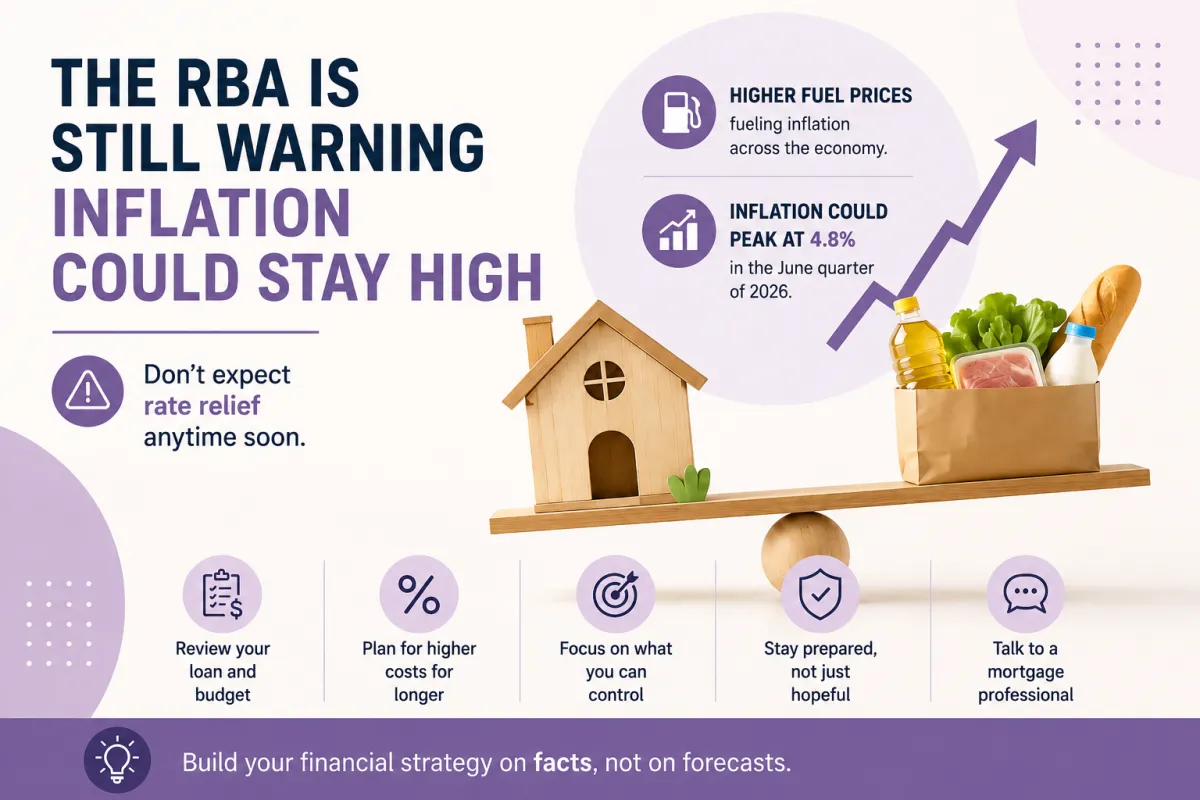
The RBA kept the cash rate unchanged at 4.35% on 16 June, highlighting that higher fuel prices are adding directly to inflation and may also flow through to the cost of other goods and services.
In its May outlook, the RBA projected that headline inflation could peak at 4.8% in the June quarter of 2026.
For homeowners, property buyers and investors, the message is important: building a financial strategy around the assumption that interest rates will fall soon could carry risks.
Why Is Inflation Still a Concern?
Inflation measures how quickly the prices of goods and services are increasing across the economy.
When inflation remains high, everyday expenses become more costly. Households may pay more for groceries, transport, energy, insurance, housing and other essential services.
Higher fuel prices can have an especially broad impact.
Fuel directly affects household transport costs, but it is also an important expense for many businesses. When transportation, delivery and operating costs rise, some businesses may pass those additional costs on to customers through higher prices.
This means fuel-related inflation may spread into other parts of the economy, potentially making inflation more persistent.
The RBA closely monitors these pressures when making decisions about the cash rate.
How Does Inflation Affect Interest Rates?
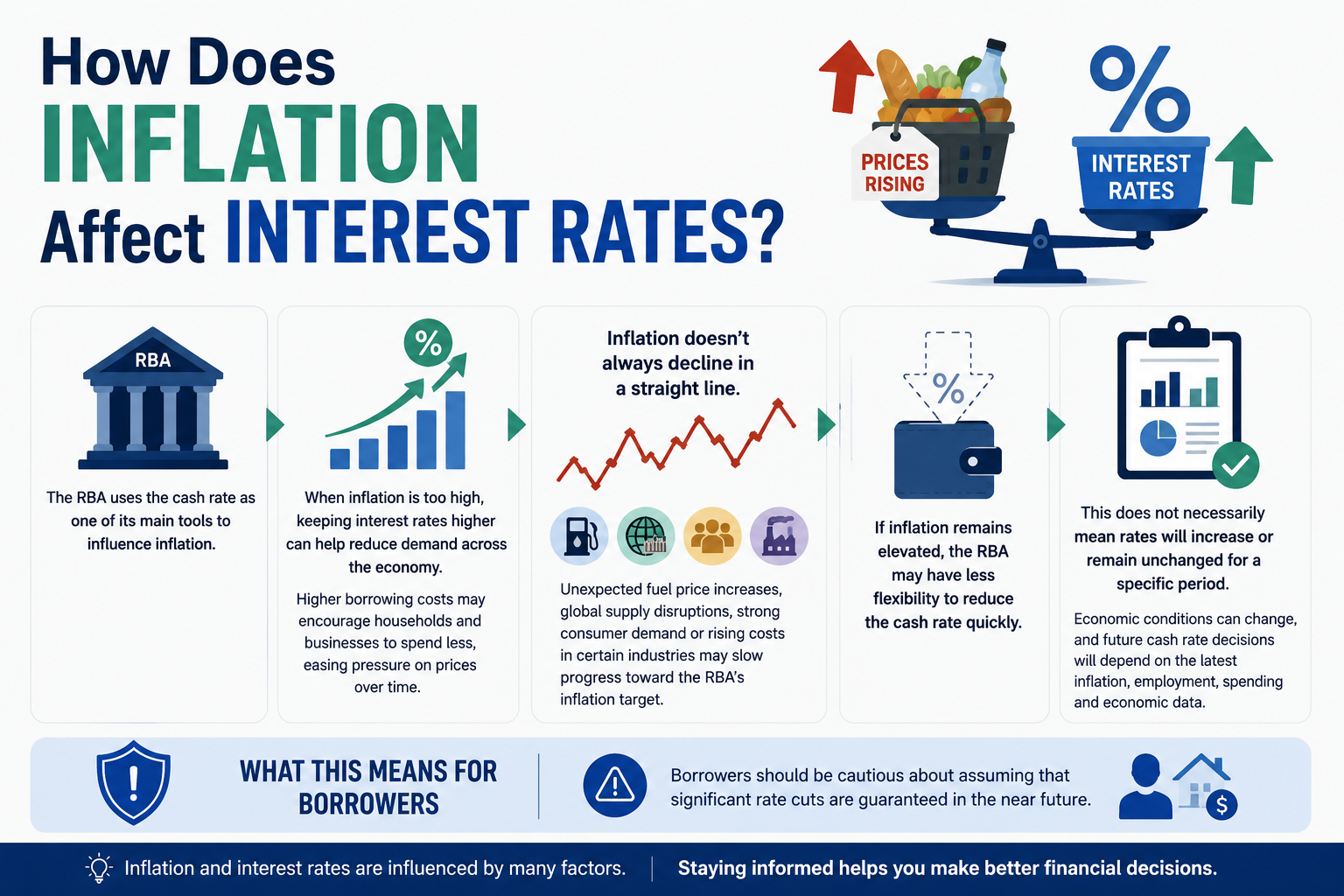
The RBA uses the cash rate as one of its main tools to influence inflation.
When inflation is too high, keeping interest rates higher can help reduce demand across the economy. Higher borrowing costs may encourage households and businesses to spend less, which can help ease pressure on prices over time.
However, inflation does not always decline in a straight line.
Unexpected increases in fuel prices, global supply disruptions, strong consumer demand or rising costs in certain industries may slow the progress of bringing inflation back toward the RBA’s target range.
If inflation remains elevated, the RBA may have less flexibility to reduce the cash rate quickly.
This does not necessarily mean rates will increase or remain unchanged for a specific period. Economic conditions can change, and future cash rate decisions will depend on the latest inflation, employment, spending and economic data.
However, borrowers should be cautious about assuming that significant rate cuts are guaranteed in the near future.
What Could This Mean for Homeowners?
For homeowners with variable-rate mortgages, the cash rate can influence the interest rates charged by lenders.
If interest rates remain higher for longer, mortgage repayments may continue to place pressure on household budgets.
Rather than waiting for a future rate cut, homeowners may benefit from reviewing their current loan now.
This may include checking:
Whether the current interest rate remains competitive
How the loan compares with other available options
Whether the loan structure still suits current circumstances
Whether an offset account or redraw facility is being used effectively
Whether consolidating certain debts may improve cash flow
What fees and costs may apply when refinancing
A home loan review does not automatically mean changing lenders. In some cases, the existing lender may offer a more competitive rate. In others, refinancing may provide potential savings or loan features that better support the borrower’s goals.
However, refinancing suitability depends on factors such as income, expenses, property value, equity, loan balance and overall financial position.
Should Buyers Wait for Interest Rates to Fall?
Some prospective buyers may be delaying their property plans because they expect lower interest rates to improve borrowing capacity or reduce repayments.
While waiting may be appropriate for some people, future rate movements are uncertain.
If rates eventually decline, borrowing conditions may improve. However, lower rates could also encourage more buyers to enter the market, potentially increasing competition for certain properties.
Instead of trying to predict the exact timing of future rate cuts, buyers may benefit from understanding what they can comfortably afford under current conditions.
This includes reviewing:
Current borrowing capacity
Available deposit and savings
Estimated loan repayments
Existing debts and financial commitments
Upfront purchasing costs
Ongoing property expenses
The impact of different interest-rate scenarios
Being prepared does not mean purchasing immediately. It means having a clearer understanding of your financial position so you can make informed decisions if the right opportunity becomes available.
What Could Higher Inflation Mean for Property Investors?
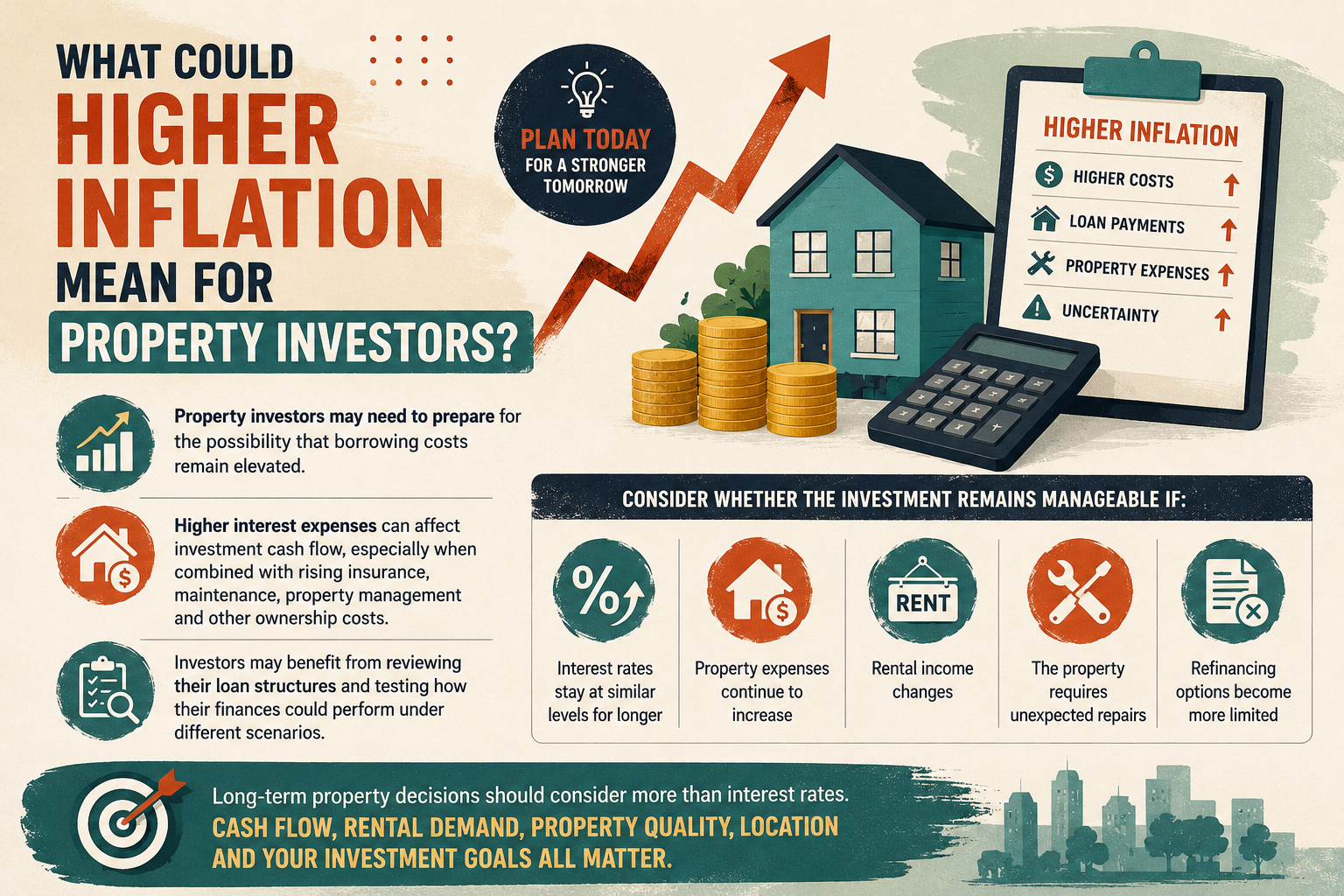
Property investors may also need to prepare for the possibility that borrowing costs remain elevated.
Higher interest expenses can affect investment cash flow, particularly when combined with rising insurance, maintenance, property management and other ownership costs.
Investors may benefit from reviewing their loan structures and testing how their finances could perform under different scenarios.
For example, consider whether the investment remains manageable if:
Interest rates stay at similar levels for longer
Property expenses continue to increase
Rental income changes
The property requires unexpected repairs
Refinancing options become more limited
Long-term property decisions should generally consider more than expected interest-rate movements. Cash flow, rental demand, property quality, location and personal investment goals may all play an important role.
Avoid Building Your Strategy Around Rate Predictions
Interest-rate forecasts can change as new economic information becomes available.
Although borrowers may welcome future rate reductions, relying on predicted cuts to make a loan affordable could create unnecessary financial pressure.
A more cautious approach may be to assess whether your mortgage or planned property purchase remains manageable under current rates.
It may also be helpful to consider how your budget would respond if rates stayed higher for longer or household expenses continued to rise.
Planning around what you can manage today may provide a stronger financial foundation than relying on uncertain future rate movements.
What Should Borrowers Do Next?
The RBA’s continued concern about inflation is a reminder that meaningful interest-rate relief may not arrive as quickly as some borrowers hope.
Homeowners may benefit from reviewing their existing mortgage rather than waiting for the cash rate to change. Buyers can assess their borrowing position and repayment comfort under current conditions. Investors may need to review cash flow, equity and loan structures carefully.
Interest rates are only one part of a broader financial picture.
Understanding your current position, comparing suitable loan options and preparing for different economic scenarios may help you make more informed decisions, regardless of what the RBA does next.
Before buying, refinancing or restructuring a loan, consider speaking with a mortgage professional who can review your circumstances and explain the options that may be available.
General information only. This article does not constitute financial or credit advice. Your individual circumstances should be considered before making financial decisions.
