RBA Inflation Forecast: Why 2.5% May Not Arrive Until 2028
Inflation Was Better Than Expected. So Why Isn't the RBA Cutting Rates?
Australia's latest inflation figures delivered some welcome news, but borrowers hoping that lower inflation will quickly translate into lower interest rates may need to be patient.
The Reserve Bank of Australia's August 2026 Statement on Monetary Policy shows headline inflation eased to 3.9% over the year to the June quarter. That was materially weaker than the RBA had previously expected, helped by lower retail fuel and travel prices.
However, the underlying picture remains more complicated.
Trimmed mean inflation was still 3.6%, and the RBA now expects inflation to return to the 2.5% midpoint of its 2% to 3% target range only around early 2028.
So, why isn't better-than-expected inflation automatically leading to interest rate relief?
Headline Inflation Is Only Part of the Story
Headline inflation measures changes across a broad range of consumer prices. It can be influenced by temporary movements in categories such as fuel, electricity and travel.
That's why the RBA also pays close attention to underlying measures such as trimmed mean inflation.
While headline inflation came in lower than expected, trimmed mean inflation remained elevated at 3.6% over the year to June. The RBA said this reflected ongoing capacity pressures across the economy and the flow-through of higher costs associated with the Middle East conflict.
For policymakers, that suggests inflationary pressure hasn't disappeared.
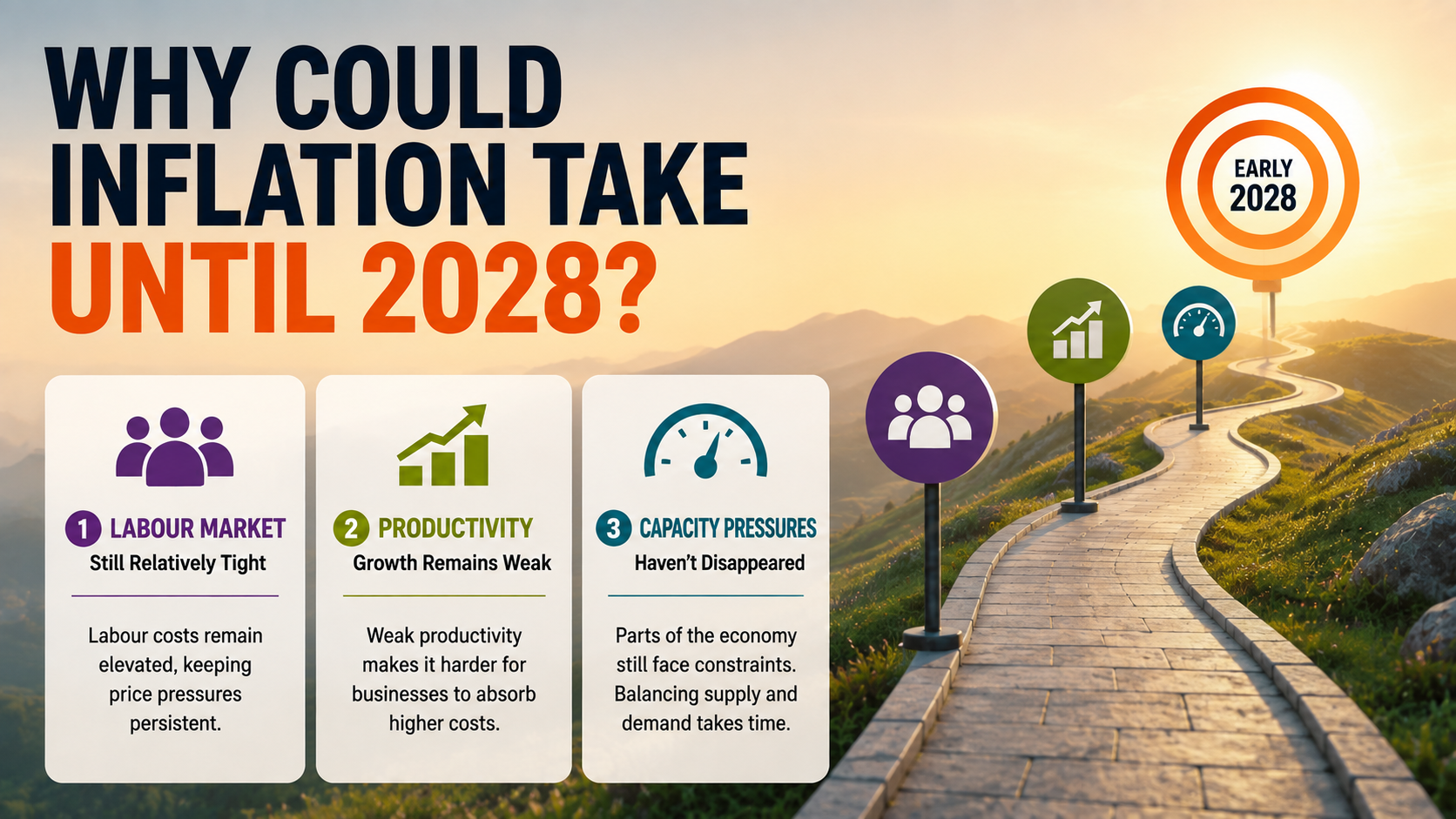
Why Could Inflation Take Until 2028?
The RBA expects both headline and underlying inflation to remain elevated in the near term before gradually declining.
Its latest forecasts point to inflation reaching around 2.5% in early 2028, rather than quickly returning to target.
Several factors are contributing to that outlook.
1. The Labour Market Is Still Relatively Tight
Labour market conditions have eased, with unemployment rising to 4.4%, but the RBA still assesses the labour market as being somewhat tighter than full employment.
Labour costs also remain elevated, which can contribute to persistent price pressures for businesses.
2. Productivity Growth Remains Weak
Productivity plays an important role in determining how quickly the economy can grow without generating additional inflation.
The RBA expects growth in Australia's potential economic output to remain relatively weak, partly reflecting its assumption of medium-term trend productivity growth of around 0.7% per year.
When productivity growth is weak, businesses can face greater difficulty absorbing higher wages and other operating costs without increasing prices.
3. Capacity Pressures Haven't Completely Disappeared
Australian economic demand has started moderating, but the RBA believes parts of the economy are still operating with capacity constraints.
Bringing supply and demand back into better balance takes time, particularly because changes in monetary policy don't affect households and businesses immediately.
What Does This Mean for Interest Rates?
For mortgage holders, the important message is that one encouraging inflation result doesn't necessarily mean rapid interest rate cuts are coming.
The RBA left the cash rate at 4.35% at its August meeting and described monetary policy as somewhat restrictive. It also said inflation is likely to remain high for some time and that risks around the inflation outlook remain tilted to the upside.
That doesn't tell us exactly when rates will eventually fall.
It does, however, suggest borrowers should be cautious about building their financial plans around expectations of significant near-term rate relief.
You Don't Have to Wait for the RBA

There's another important distinction for homeowners.
The RBA cash rate and the interest rate offered by your lender aren't the same thing.
Banks and non-bank lenders regularly adjust their mortgage pricing based on funding costs, competition, risk and their appetite for new customers.
That means opportunities may emerge even while the official cash rate remains unchanged.
A mortgage review could help determine whether:
Your existing interest rate remains competitive
Another lender has a more suitable offer
Refinancing could reduce your repayments
Your loan structure could be improved
Different loan features could better suit your circumstances
Don't Base Your Mortgage Strategy on Predictions
Trying to perfectly predict the next RBA decision can be difficult.
Instead, homeowners can focus on factors they can control.
Check your current interest rate. Understand your loan features and fees. Compare your mortgage against suitable alternatives. Consider whether your financial circumstances have changed since you originally took out the loan.
Most importantly, don't assume that waiting for inflation or the cash rate to fall is automatically the best strategy.
The Bottom Line
Australia's latest inflation figures were better than the RBA had previously expected, particularly for headline inflation.
But underlying inflation remains elevated, productivity growth is weak and parts of the economy are still experiencing capacity pressures.
That's why the RBA expects inflation to decline only gradually, reaching around the 2.5% midpoint of its target range in early 2028.
For mortgage holders, the message is straightforward: better inflation doesn't necessarily mean immediate interest rate relief.
Rather than waiting for the RBA to make the next move, reviewing your existing mortgage can help you understand whether more competitive options are already available.
At LNO Mortgages, we can help you review your current home loan, compare suitable lending options and understand whether refinancing could make sense for your circumstances.
General information only. This content does not constitute financial or credit advice. Lending criteria, fees and individual circumstances apply.
