
New Super Tax Rules: What Large Super Balances Could Mean for Your Investment Strategy
Large super balance? New tax rules may change the way you assess your long-term investment strategy.
From 1 July 2026, new tax rules reduce concessions on earnings associated with large superannuation balances.
The changes may be particularly relevant to Australians with high super balances, including some self-managed super fund (SMSF) members and investors reviewing how superannuation, property and other assets fit within their long-term financial strategy.
Under the new framework, additional tax applies to certain earnings attributable to super balances above the legislated thresholds. Importantly, the higher tax treatment applies to the relevant proportion of earnings associated with balances above those thresholds, rather than automatically applying to the entire super balance.
For investors, this does not necessarily mean super is no longer an effective investment structure. However, it may create a reason to review existing arrangements with appropriately qualified tax, superannuation and financial advisers.
What Has Changed?
Superannuation has traditionally provided a concessionally taxed environment designed to support Australians in building savings for retirement.
From the 2026–27 financial year, the tax treatment of earnings associated with large super balances has changed.
The new rules introduce additional taxation for individuals with total superannuation balances above $3 million, with a further tier applying to balances above $10 million. The changes apply from 1 July 2026.
The additional tax is intended to reduce the level of tax concessions available on earnings linked to very large super balances.
However, the calculation can be complex. The outcome may depend on factors such as:
Your total superannuation balance
The portion of earnings associated with balances above the relevant threshold
Contributions and withdrawals
The structure of your super investments
Your broader financial circumstances
The rules may affect individuals differently. Before making changes, it is important to obtain advice based on your personal position.
Why Could This Matter for Long-Term Investors?
Tax treatment is only one factor when assessing an investment strategy, but changes to taxation can influence how investors compare different structures.
People with large super balances may begin reviewing how their retirement savings work alongside personally owned investments, property, trusts, companies or other investment structures.
However, moving assets or changing an investment strategy solely in response to a tax change may create other financial, legal or tax consequences.
Investors may need to consider:
Long-term investment objectives
Expected income and capital growth
Liquidity requirements
Retirement plans
Investment time frame
Risk tolerance
Diversification
Tax implications
Estate-planning considerations
The most suitable approach will depend on individual circumstances. A structure that works well for one investor may not be appropriate for another.
What Could the Changes Mean for SMSF Members?

SMSFs can provide members with greater control over investment decisions, including the ability to invest in certain types of property when regulatory requirements are met.
For SMSF members with large balances, the new tax rules may create additional considerations when reviewing fund performance, investment allocation and long-term strategy.
This may be particularly relevant where an SMSF holds a significant property asset.
Property can be relatively illiquid, meaning it may not always be possible to access cash quickly without refinancing or selling the asset. SMSF trustees may therefore need to consider whether the fund maintains sufficient liquidity to meet expenses, loan repayments, tax obligations and other commitments.
However, the introduction of new tax rules does not automatically mean an existing SMSF property strategy should change.
Any decision should consider the fund’s investment strategy, cash flow, member circumstances, retirement objectives and regulatory obligations.
SMSF trustees should seek advice from appropriately qualified financial, tax, legal and superannuation professionals before restructuring investments or making significant decisions.
How Could This Relate to SMSF Property Lending?
Some Australians use an SMSF to purchase investment property through a limited recourse borrowing arrangement, commonly known as an LRBA.
SMSF property lending is different from standard residential property finance. Lending policies, deposit requirements, loan structures, documentation and costs may vary between lenders.
When assessing an SMSF property loan, lenders may consider factors such as:
The SMSF’s financial position
Member contributions
Rental income from the proposed property
Available cash reserves
The property type and location
Loan repayments and serviceability
The fund’s ability to meet ongoing obligations
The structure of the borrowing arrangement
The new super tax rules do not replace these lending requirements. However, tax changes may influence how some high-balance members assess the role of property within their broader retirement strategy.
Before considering an SMSF property purchase, investors should first obtain appropriate advice about whether the investment and structure align with their financial goals and legal obligations.
A mortgage broker can provide information about available SMSF lending options but cannot replace qualified tax, financial, legal or superannuation advice.
Should Investors Move Money Out of Super?
There is no single answer.
The introduction of additional tax does not necessarily mean withdrawing money from super or changing investment structures will produce a better outcome.
Superannuation may continue to provide important benefits depending on an individual’s circumstances. Decisions involving withdrawals, asset transfers or restructuring may also have tax, investment, retirement and estate-planning consequences.
Before taking action, investors may benefit from reviewing questions such as:
How do the new rules apply to my total super balance?
What additional tax may apply to my circumstances?
How does my super strategy support my retirement goals?
Do I have sufficient diversification and liquidity?
How do property and other investments fit within my broader strategy?
Could changing the structure create additional costs or tax consequences?
These questions should be discussed with appropriately qualified advisers before any financial decisions are made.
Review the Strategy, Not Just the Tax Rate
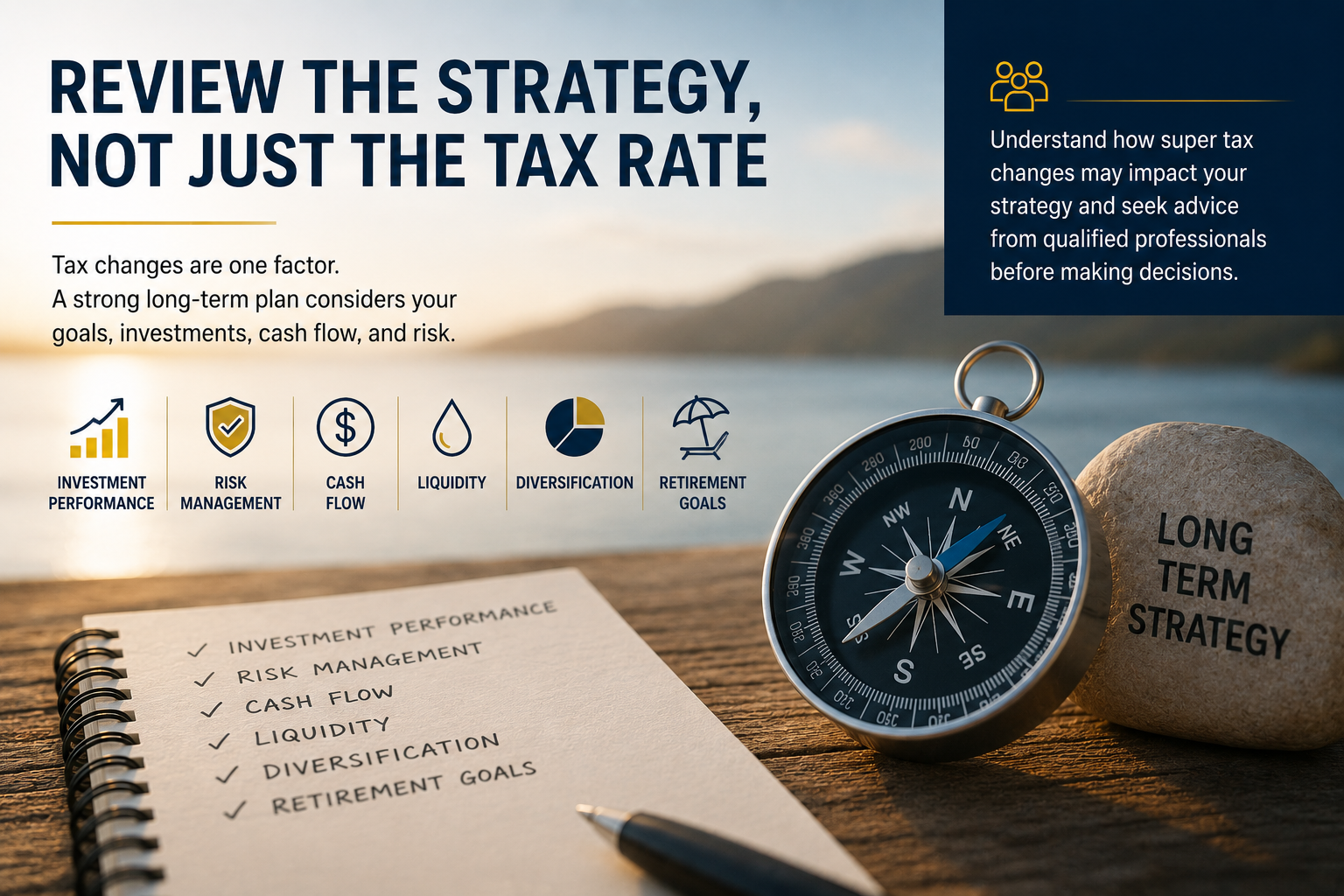
Changes to super taxation may encourage some investors to reassess their long-term plans, but tax should not be considered in isolation.
Investment performance, risk, cash flow, liquidity, diversification and retirement objectives may all influence whether an existing strategy remains suitable.
For SMSF members considering property, it may also be useful to understand how borrowing requirements, lender policies and loan structures could affect the fund.
The goal is not necessarily to react quickly. It is to understand how the changes may apply and make informed decisions based on professional advice.
What Should High-Balance Super Members Do Next?
The new tax rules provide an opportunity for people with large super balances to review how their retirement savings and investments are structured.
This may involve speaking with a qualified financial adviser, tax professional, accountant or superannuation specialist to understand the potential impact.
If SMSF property investment forms part of the strategy, a mortgage broker can help explain lending options, borrowing requirements and potential loan structures after appropriate financial, tax and legal advice has been obtained.
Understanding how super, property and other investments work together may support better long-term planning as the regulatory environment changes.
General information only. This article does not constitute financial, tax, legal, superannuation, investment or credit advice. SMSF borrowing and property investment involve risks and regulatory requirements. Seek advice from appropriately qualified professionals before making financial or investment decisions.
