Australian Housing Affordability Hits Record Low: Typical Households Can Afford Just 12% of Homes
The Average Australian Household Can Now Afford Just 12% of Homes. Five Years Ago, It Was 43%
Australian property prices have started falling.
Normally, that should make homes easier to afford.
But that is not what is happening.
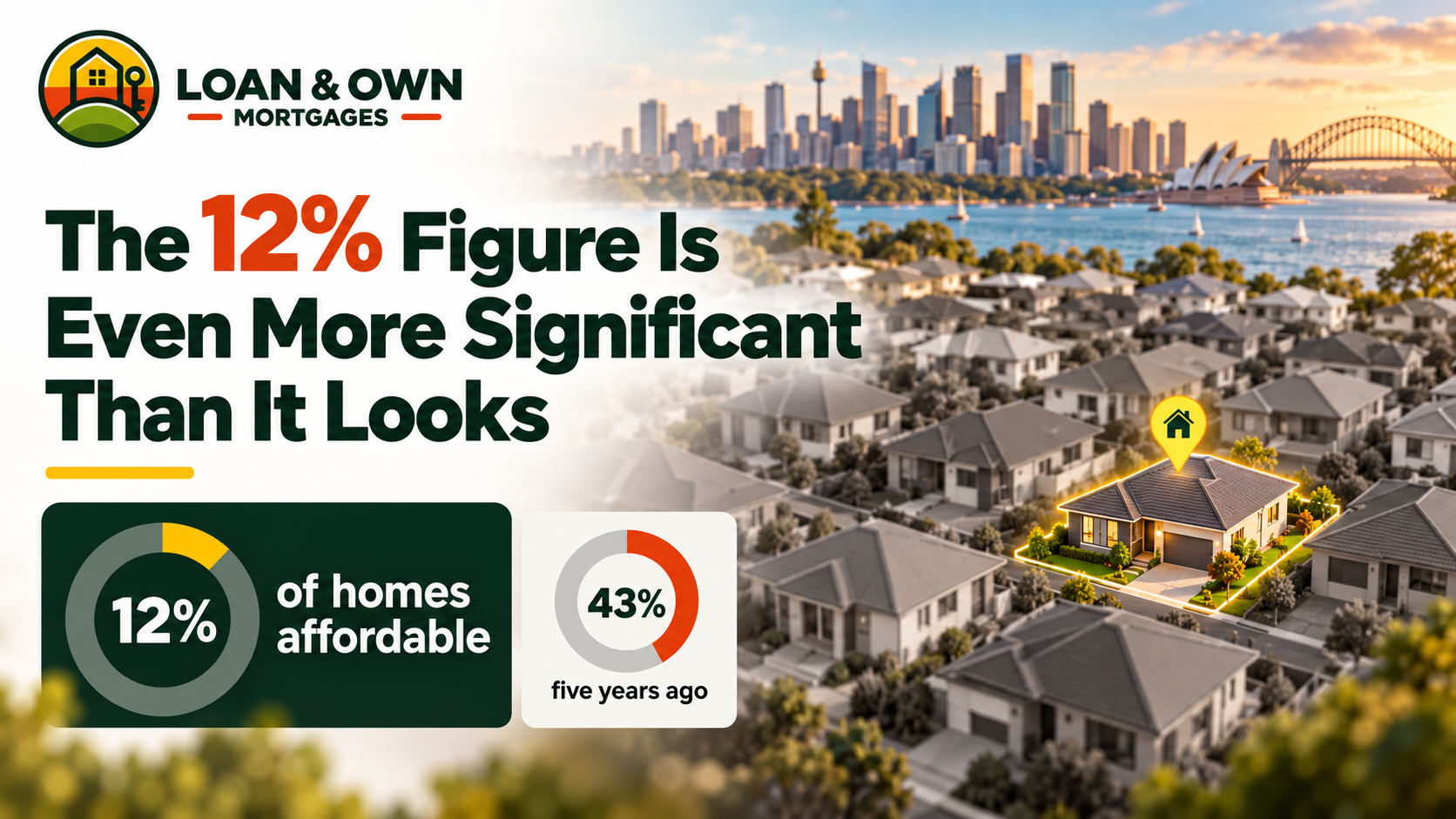
Fresh 2026 affordability data shows that a typical Australian household earning around $125,000 a year can afford just 12% of homes sold nationally.
Five years ago, that same income segment could afford around 43% of homes sold.
The latest result is the lowest recorded by the realestate.com.au Housing Affordability Index, even below the previous low reached around the Global Financial Crisis.
For lower-income Australians, the picture is even more difficult.
A household earning approximately $76,000 a year can afford just 2% of homes sold.
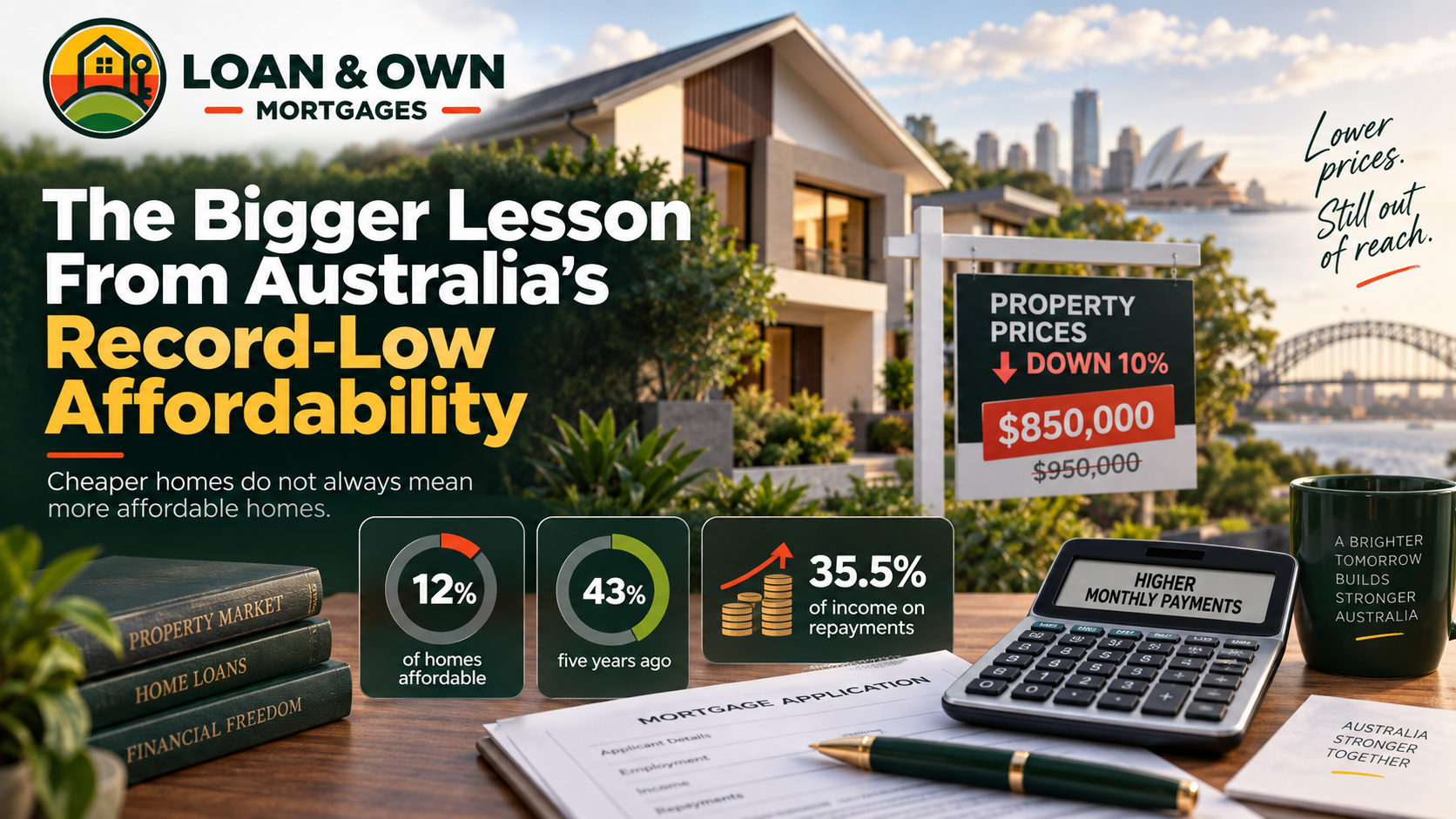
At the same time, mortgage repayments on a median-priced home now consume around 35.5% of average household income, the highest proportion since 1989.
So why has affordability deteriorated even while home prices are beginning to fall?
Because property price and property affordability are not the same thing.
That distinction is becoming increasingly important for Australian buyers.
The Key Numbers
Housing affordability indicator | Latest position |
|---|---|
Homes affordable to median-income household | 12% |
Median household income used in report | ~$125,000 |
Homes affordable five years ago | 43% |
Homes affordable to ~$76,000 household | 2% |
Mortgage repayments as share of average household income | 35.5% |
Previous comparable mortgage burden | Highest since 1989 |
South Australia affordability | 7% of homes |
Victoria affordability | 16% of homes |
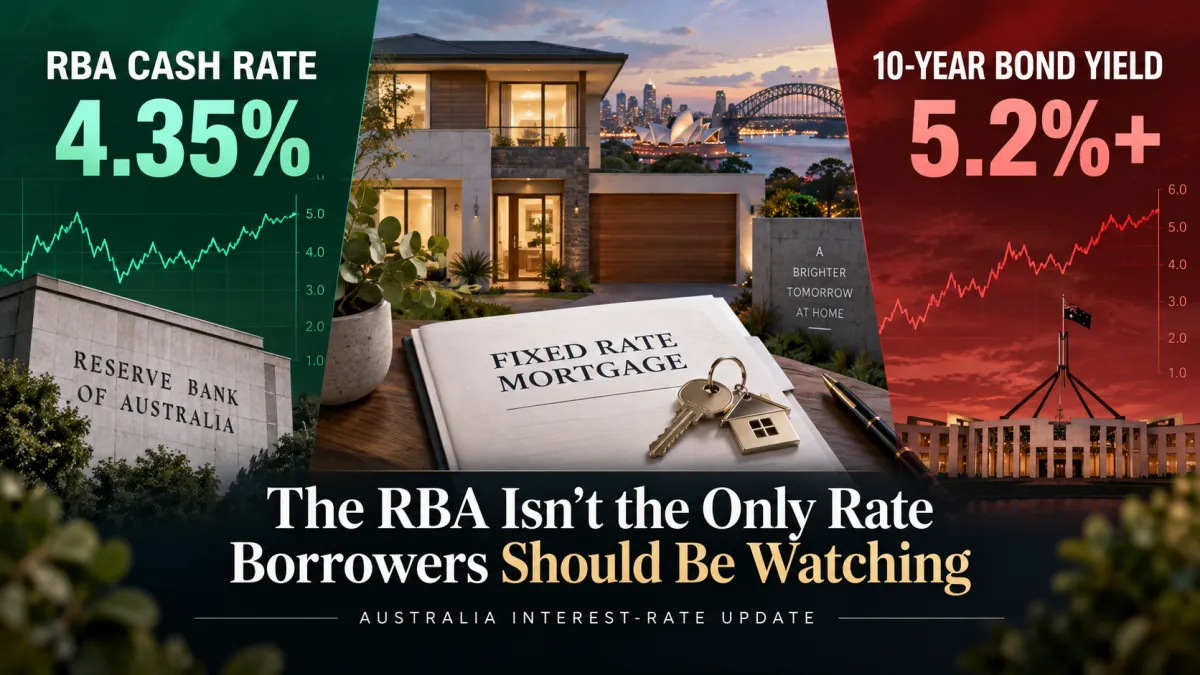
Current RBA cash rate | 4.35% |
The fall from 43% to 12% in only five years is one of the clearest measures of how much the economics of buying a home have changed.
And importantly, it is not just a Sydney or Melbourne story.
Affordability deteriorated in every state during FY26.
Why Falling House Prices Have Not Fixed Affordability

A home can become cheaper and still become less affordable.
That may sound contradictory, but affordability depends on more than the purchase price.
It is shaped by at least four major factors:
property prices
household income
mortgage interest rates
borrowing capacity
Recent property-price declines have helped at the margin.
But according to the realestate.com.au report, they have not been large enough to offset the impact of higher borrowing costs.
The report found that strong property-price growth during 2025, combined with higher mortgage rates later in the financial year, reduced household borrowing capacity substantially. Recent price softening and income growth were not enough to reverse that effect.
That is the central issue.
A buyer does not purchase a property based only on its price.
Most buyers purchase it using debt.
And when the cost of that debt rises, the same household can borrow materially less.
Interest Rates Have Changed the Equation
The Reserve Bank of Australia has increased the cash rate three times in 2026.
The cash rate currently stands at 4.35%, after increases in February, March and May.
The RBA has acknowledged that financial conditions have tightened significantly as a result.
Higher cash rates feed through into mortgage rates.
That affects affordability in two ways.
First, repayments increase for borrowers with variable-rate loans.
Second, lenders assess new borrowers against higher repayment obligations.
That means the same household income can support a smaller loan.
So even if home prices fall by several percentage points, a large rise in borrowing costs can more than cancel out that benefit.
A Simple Way to Think About It
Imagine a household that could previously borrow enough to compete for a wide range of homes.
If mortgage rates increase, the lender may reassess that household's borrowing capacity downward.
The household is now shopping with a smaller budget.
If property prices have fallen, but not by as much as borrowing capacity has fallen, affordability gets worse.
This is effectively what the latest national data is showing.
35.5% of Household Income Going to Mortgage Repayments
Another striking measure is the share of household income required to service a median-priced home.
Mortgage repayments are now estimated to consume around 35.5% of average household income.
That is the highest level since 1989.
For context, ABC reported this is even higher than during the Global Financial Crisis, when the equivalent measure was around 33.3%.
That matters because mortgage affordability is not just about whether a lender will approve a loan.
Borrowers also need to consider whether repayments remain manageable alongside:
groceries
childcare
transport
insurance
utilities
rates
school costs
other debts
emergency savings
A borrower can technically qualify for a mortgage and still find the monthly cash flow uncomfortable.
That is why assessing affordability is different from simply asking, "How much can I borrow?"
The 12% Figure Is Even More Significant Than It Looks
The realestate.com.au Housing Affordability Index looks at the share of homes that households at different income levels could reasonably afford.
For a household earning around $125,000, only 12% of homes sold nationally fell within an affordable range in FY26.
That compares with:
43% in FY21
and a previous record low of:
14% in FY08
So Australia's current affordability challenge is now worse, by this measure, than it was around the time of the Global Financial Crisis.
The difference between 43% and 12% also illustrates how dramatically the buyer pool has narrowed.
Five years ago, a median-income household potentially had access to almost half of the market.
Today, it has access to little more than one in ten homes.
Lower-Income Households Are Almost Locked Out
For households earning around $76,000 annually, affordability falls to just 2% of homes sold.
That means a large proportion of lower-income buyers may have extremely limited options without:
a substantially larger deposit
a second income
family assistance
government support
purchasing in a cheaper location
choosing a smaller property
changing property type
Even then, lender servicing requirements still apply.
This is why affordability pressure can be particularly severe for single-income households.
A household with two incomes can often borrow materially more than a household relying on one income, even if the total deposit is similar.
South Australia Is Now the Least Affordable State
One of the more surprising findings is that South Australia has overtaken New South Wales as the least affordable state.
The report found that a median-income South Australian household could afford only 7% of homes sold.
Adelaide's median home value was around $940,000, while household incomes in South Australia are generally lower than in some larger eastern states.
That combination has created particularly severe affordability pressure.
The report said South Australia has experienced the sharpest deterioration in affordability of any state over the past six years.
NSW is now second least affordable
New South Wales moved into second place.
Sydney prices have softened recently, but the decline was not enough to materially restore affordability after years of strong price growth and higher mortgage rates.
Victoria is now the most affordable state
Victoria has become Australia's most affordable state according to the index.
But even there, a median-income household can afford only around 16% of homes sold.
Being "most affordable" therefore does not mean housing is broadly affordable.
It simply means conditions are less severe relative to other states.
HIA Data Tells the Same Story
The Housing Industry Association released a separate affordability measure at almost the same time.
Its Affordability Index deteriorated another 3.1% in the June quarter of 2026, putting Australian housing at its least affordable level since HIA records began in 1994.
HIA said affordability deteriorated in every market, including areas where property prices had already started falling.
That is particularly important.
It independently reinforces the same message:
Lower property prices do not automatically mean better affordability when mortgage costs are rising faster than incomes.
HIA estimates it now takes approximately 1.9 average incomes to comfortably service a mortgage on a median-priced dwelling in Australia's capital cities and around 1.8 incomes in regional areas.
Property Prices and Borrowing Capacity Move Differently
This is where many potential buyers get confused.
A buyer may hear:
"Sydney prices are down."
They may reasonably assume:
"That means I should be able to afford more."
But lenders are simultaneously reassessing affordability using:
current interest rates
serviceability buffers
household living expenses
other debts
credit-card limits
personal loans
HELP debt
dependants
income type
If mortgage rates rise enough, borrowing capacity can fall faster than property prices.
So a buyer can find that houses are cheaper while their maximum loan is also smaller.
The net result may still be worse affordability.
Why a 10% Price Fall Does Not Necessarily Mean a Home Is 10% More Affordable
This is an important distinction.
Suppose property values fall by 10%.
That sounds like a significant improvement.
But if mortgage servicing costs have risen sharply and the buyer's borrowing capacity has fallen by more than 10%, the buyer may actually be in a weaker purchasing position than before.
Affordability should therefore be viewed as an interaction between:
income + debt capacity + deposit + mortgage rate + property price
Looking at the property price alone tells only part of the story.
The Deposit Problem Has Not Disappeared Either
Even where borrowers can service a loan, saving the upfront contribution remains another major challenge.
A lower property price can reduce the deposit required in dollar terms.
But many households are also dealing with elevated rents, higher living costs and slower savings accumulation.
That can make building a deposit difficult.
Depending on the borrower and loan structure, buyers may also need to budget for:
stamp duty
conveyancing
building and pest reports
lenders mortgage insurance
loan fees
removal costs
emergency reserves
Affordability therefore has two separate hurdles:
Can you get into the property?
and
Can you comfortably maintain the repayments afterward?
What Does This Mean for First-Home Buyers?
For first-home buyers, the latest data may sound discouraging.
But it does not mean buying is impossible.
It means strategy matters more.
Potential first-home buyers may need to consider:
buying a unit rather than a detached house
looking at different suburbs
considering regional locations
increasing their deposit
paying down other debts
reducing unused credit limits
purchasing with a partner
reviewing eligibility for government schemes
comparing different lender policies
Different lenders can assess the same borrower differently.
Income treatment, overtime, bonuses, self-employed income, existing liabilities and servicing calculations can all vary.
That means knowing your actual borrowing capacity before house hunting can be especially valuable in the current environment.
What About Self-Employed Borrowers?
Self-employed Australians can face an additional layer of complexity.
A business owner may have strong cash flow but taxable income that does not always reflect their full financial position.
Different lenders can treat:
retained profits
director wages
company distributions
add-backs
depreciation
one-off expenses
differently.
In a low-affordability market, these lender-policy differences can materially change the property price range available to a borrower.
That makes loan structure and lender selection increasingly important.
What Could Improve Housing Affordability?
There is no single solution.
Affordability can improve through a combination of:
lower mortgage rates
higher household incomes
lower property prices
increased housing supply
lower construction costs
infrastructure investment
faster planning approvals
UDIA argues that policies aimed at helping buyers should be matched by measures that increase housing supply.
Its concern is that demand-side assistance alone can put more purchasing power into the same constrained housing market.
UDIA is therefore calling for measures including faster approvals, more enabling infrastructure and policies that support new housing construction.
There are different views on the best mix of housing policies, but the underlying supply constraint is clearly one of the major long-term affordability challenges.
Could Falling Prices Eventually Improve Affordability?
Yes, but the size of the price decline matters.
So does what happens to interest rates.
If home prices fall materially while mortgage rates stabilise or decline, borrowing affordability could improve.
If prices fall but rates rise again, improvement may be limited.
If incomes rise faster than both property prices and borrowing costs, affordability can also improve.
That means the path forward depends on several moving parts rather than one headline property-price index.
The RBA Remains an Important Part of the Story
The cash rate currently sits at 4.35%.
The RBA has increased rates by 75 basis points in 2026 and says financial conditions are now somewhat restrictive.
The next cash-rate update is scheduled for 29 September 2026.
For prospective borrowers, that means future affordability will continue to depend partly on the inflation outlook and the direction of monetary policy.
But waiting for the RBA alone is not necessarily a financial strategy.
Borrowers can also work on factors they can control.
What Buyers Can Control
Even in a difficult affordability environment, borrowers may improve their position by focusing on:
Deposit
A larger deposit may reduce the loan amount and potentially improve lender options.
Existing debts
Personal loans, car finance and credit cards can reduce borrowing capacity.
Credit-card limits
Even unused limits may affect serviceability calculations.
Loan structure
Different products and repayment structures suit different borrowers.
Lender choice
Banks do not all assess income and expenses identically.
Property expectations
Changing suburb, property type or price range can materially increase available options.
These factors cannot solve Australia's broader affordability problem.
But they can influence an individual borrower's position.
Borrowing Capacity Is More Important Than the Headline Property Price
For someone planning to buy, a better first question may no longer be:
"How much are property prices falling?"
It may be:
"What can I realistically borrow and repay today?"
That gives buyers a more accurate starting point.
If the answer is lower than expected, a mortgage broker can help identify what is limiting borrowing capacity and whether alternative lending structures may exist.
Sometimes the answer is lender policy.
Sometimes it is existing debt.
Sometimes it is simply that the property target is above what is sustainable.
Knowing that before making offers can prevent wasted time and financial pressure.
The Bigger Lesson From Australia's Record-Low Affordability
The latest data exposes one of the biggest misunderstandings in the Australian property market:
Cheaper homes do not necessarily mean more affordable homes.
The price of the property matters.
But so does the price of the money used to buy it.
A median-income household could afford around 43% of homes five years ago.
Today, it can afford just 12%.
For lower-income households, the share has fallen to just 2%.
And servicing a median-priced home now consumes around 35.5% of average household income.
Those figures demonstrate how dramatically the borrowing environment has changed.
Property prices may continue to soften.
But restoring affordability will require more than modest price declines.
It will depend on what happens next with mortgage rates, incomes, housing supply and construction.
Want to Understand What You Can Actually Afford?
At Loan & Own Mortgages, we help home buyers, first-home buyers, investors and self-employed borrowers understand their real borrowing position before they commit to a property.
That can include reviewing borrowing capacity, deposit requirements, lender policy, repayments and different loan structures.
In a market where property prices and affordability are moving in different directions, knowing your numbers early can make a major difference.
Speak with Loan & Own Mortgages to understand your borrowing capacity and finance options before making your next property move.
Data sources
realestate.com.au Housing Affordability Report 2026
A median-income household earning around $125,000 can afford just 12% of homes sold nationally, down from 43% five years ago. A household around the 30th income percentile, earning approximately $76,000, can afford just 2%.
Urban Development Institute of Australia, 7 September 2026
UDIA highlighted the same affordability findings and reported that mortgage repayments on a median-priced home now consume around 35.5% of average household income.
Housing Industry Association, September 2026
The HIA Affordability Index deteriorated 3.1% in the June quarter, reaching its weakest level since HIA records began in 1994.
Reserve Bank of Australia
Cash rate target: 4.35%, with the next monetary-policy update scheduled for 29 September 2026.
This article contains general information only and does not constitute personal financial, credit, tax or legal advice. Borrowing capacity, loan eligibility, interest rates and repayments depend on individual circumstances and lender assessment.
