
Benefits for Consumers as Australia's Payments System Evolves
RBA Continues Modernising Australia's Payments System
Australia's payment landscape is evolving, and the Reserve Bank of Australia (RBA) is taking another major step towards a faster, safer and more efficient financial future.
In July, the RBA released its vision for the future of Australia's account-to-account (A2A) payments system, outlining how digital payments could become more seamless for consumers, businesses and financial institutions.
While most Australians already enjoy convenient electronic payments, these latest initiatives aim to build a payments infrastructure that better supports the country's growing digital economy.
What Is an Account-to-Account (A2A) Payment?
An account-to-account payment allows money to move directly from one bank account to another without relying on traditional card networks.
Examples include:
Online bank transfers
PayID payments
Real-time business payments
Digital invoice payments
Future open banking payment solutions
Australia's New Payments Platform (NPP) has already made instant bank transfers possible, and the RBA's latest vision seeks to expand these capabilities even further.
Why Is the RBA Modernising the Payments System?

Technology is changing the way Australians pay for goods and services.
Consumers increasingly expect payments to be:
Instant
Secure
Available 24/7
Easy to track
Cost-effective
Businesses also want payment systems that improve cash flow, reduce manual administration and integrate smoothly with accounting and financial software.
The RBA's long-term vision aims to create a payments ecosystem capable of supporting these expectations while maintaining high levels of security and reliability.
What Could Change?
Although implementation will occur over time, the RBA's roadmap focuses on several key improvements.
Faster Payments
Real-time settlement means funds can move between accounts almost instantly, improving cash flow for businesses and providing greater convenience for customers.
Improved Security
Modern payment systems are being designed with stronger fraud prevention, identity verification and cybersecurity protections to help reduce financial crime.
Better Business Efficiency
Businesses may benefit from:
Faster invoice payments
Automated reconciliation
Reduced payment processing delays
Better integration with accounting platforms
Improved cash-flow management
These efficiencies can save both time and administrative costs.
More Payment Innovation
The new framework also encourages innovation by supporting emerging financial technologies and allowing payment providers to develop new services for Australian consumers and businesses.
Why This Matters for Small Businesses
Small and medium-sized businesses often rely on healthy cash flow to manage day-to-day operations.
Delayed payments can affect:
Payroll
Supplier payments
Inventory purchases
Business growth
A more efficient account-to-account payment system could help businesses receive funds faster, making it easier to manage working capital and reduce financial uncertainty.
Benefits for Consumers
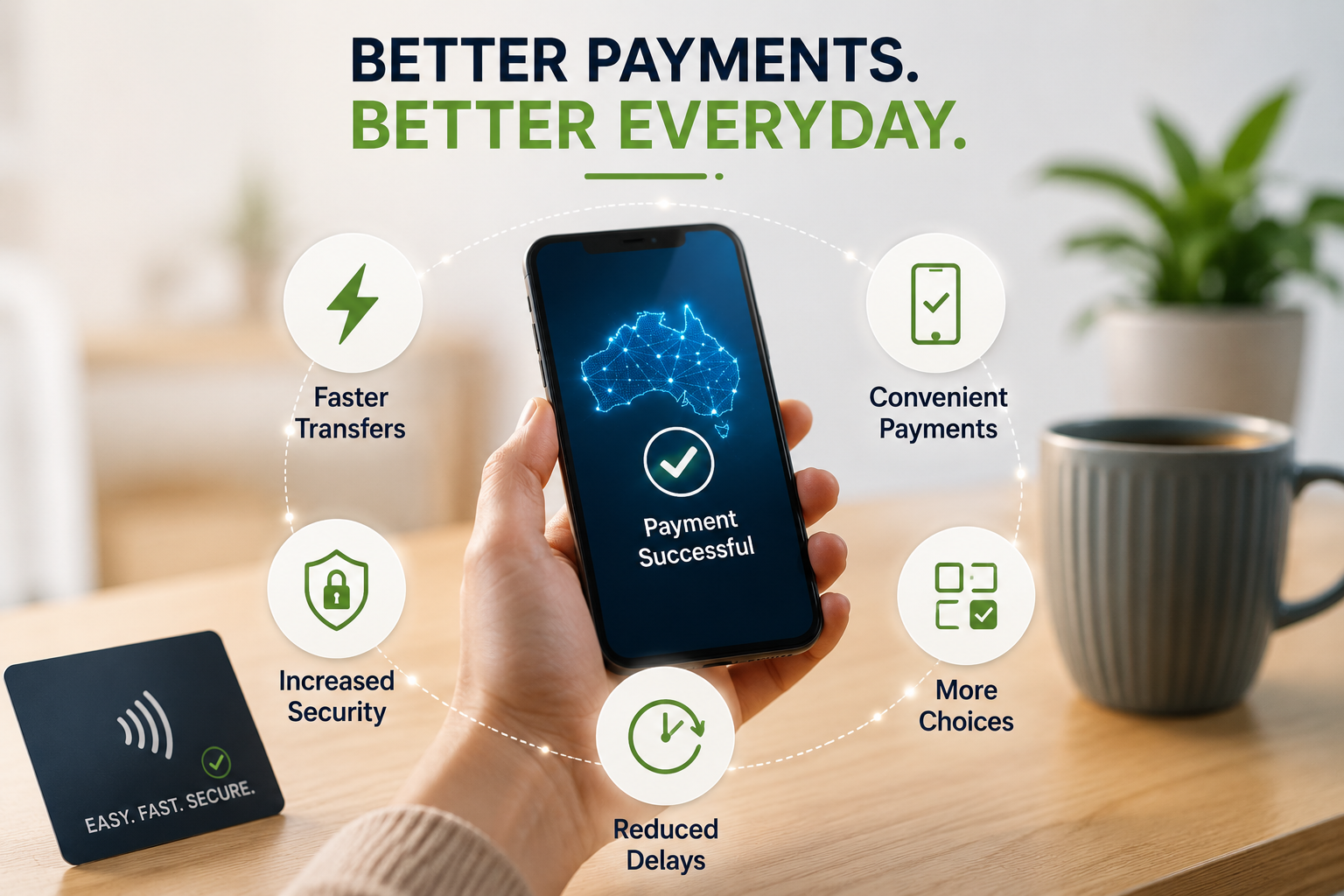
Consumers may also experience several advantages as Australia's payment infrastructure continues to improve.
Potential benefits include:
Faster transfers between bank accounts
More convenient online payments
Increased payment security
Reduced payment delays
Greater choice in digital payment options
As financial technology continues to evolve, Australians are likely to see more innovative payment experiences across everyday banking.
What Does This Mean for Borrowers?
Although the RBA's payment reforms don't directly affect home loan interest rates, they contribute to a stronger and more efficient financial system.
Over time, improved payment infrastructure may help lenders streamline loan processing, settlement procedures and customer service.
For borrowers, this could lead to smoother financial transactions throughout the home-buying and refinancing journey.
Australia's Financial System Continues to Evolve
The RBA's latest initiatives demonstrate Australia's commitment to building modern financial infrastructure that keeps pace with changing consumer expectations and technological innovation.
As digital payments become increasingly central to everyday life, ongoing investment in secure and efficient payment systems will benefit consumers, businesses and the broader economy alike.
The Bottom Line
The Reserve Bank of Australia's vision for the future of account-to-account payments represents another important step in modernising Australia's financial system.
While many of the proposed improvements will be introduced over time, the direction is clear—faster, safer and more efficient digital payments designed to support Australia's growing digital economy.
For businesses, consumers and financial institutions, these developments have the potential to make everyday banking simpler, more secure and better suited to the needs of the future.
