
Australian Business Growth & Survival: Why Finance Matters
460,000 Australian Businesses Opened Last Year. 375,000 Also Closed. What Separates Survival From Growth?
Australia continues to be a nation of entrepreneurs, but the latest business data also highlights how challenging it can be to build and sustain a business.
New figures from the Australian Bureau of Statistics show there were 2,814,778 actively trading businesses in Australia at 30 June 2026, representing a 3.1% increase over the previous year.
During 2025-26, 460,461 businesses entered the market, while 375,331 exited. That produced a net increase of 85,130 businesses.
The numbers demonstrate plenty of entrepreneurial activity. But they also reinforce an important point for business owners:
Starting a business and building a financially sustainable business are two very different challenges.
Australia Is Still Creating Businesses
Despite challenging economic conditions, Australians continue to establish new businesses.
The ABS recorded a 16.9% business entry rate during 2025-26, with more than 460,000 businesses entering the market. At the same time, the exit rate was 13.8%.
Some industries experienced particularly strong growth.
Health Care and Social Assistance recorded a 6.7% increase in business numbers, while Transport, Postal and Warehousing grew 4.9%. Financial and Insurance Services increased 4.3%.
But looking only at the number of businesses being created doesn't tell the complete story.
Hundreds of thousands also exited.
Why Business Survival Matters

There are many reasons businesses enter and exit the market, so the ABS figures should not be interpreted as showing that all 375,331 exits were business failures.
However, the scale of business turnover highlights the importance of financial resilience.
A business can generate sales and still experience financial pressure.
Rent, wages, insurance, utilities, inventory, equipment, marketing, tax obligations and loan repayments can all consume cash.
When borrowing costs are elevated, financing those expenses can also become more expensive.
This makes cash-flow management particularly important.
Profit and Cash Flow Aren't the Same Thing
One of the most important concepts for growing businesses is understanding the difference between profit and available cash.
A business might appear profitable on paper but still experience a cash-flow shortage.
For example, customers may take 30 or 60 days to pay invoices while wages, rent and suppliers need to be paid immediately.
Rapid growth can sometimes increase this pressure.
More customers may require additional inventory, staff, equipment or operating expenses before the resulting revenue reaches the business.
Without sufficient working capital, growth itself can create financial strain.
Working Capital Can Become Critical
Working capital helps businesses manage the gap between incoming revenue and outgoing expenses.
Depending on the circumstances, businesses may seek finance to support:
Day-to-day operating expenses
Inventory purchases
Equipment or vehicles
Business expansion
Seasonal cash-flow requirements
New staff or additional capacity
Unexpected expenses
The appropriate structure will depend on the purpose of the funding, the business's financial position and lender requirements.
Using long-term finance for short-term needs, or relying heavily on expensive short-term credit, may create unnecessary pressure.
That is why understanding the purpose of the funding before choosing a finance structure is important.
Access to Finance Can Change as a Business Grows
Businesses shouldn't assume every lender will assess them in the same way.
Depending on the finance product, lenders may examine factors including business turnover, profitability, cash flow, trading history, existing debts and the purpose of the proposed borrowing.
The structure and age of the business can also matter.
This means the finance option that worked when a business was smaller may not necessarily remain the most appropriate as it grows.
Periodically reviewing existing facilities can help business owners understand whether their current structure still matches their needs.
Small Businesses Face a Different Growth Challenge
The latest ABS figures also reveal an interesting difference between employing and non-employing businesses.
During 2025-26, the number of non-employing businesses increased by 4.8%, while businesses employing one to four people increased by just 0.1%. Overall, employing businesses grew only 0.2%.
This doesn't necessarily indicate financial stress, but it demonstrates how much of Australia's business growth is occurring among very small operations.
Moving from working independently to hiring employees can represent a significant financial step.
Payroll, superannuation, equipment, software, workspace and other expenses can increase quickly.
Business owners therefore need to understand whether their cash flow can comfortably support expansion.
Finance Should Support the Business, Not Create More Pressure
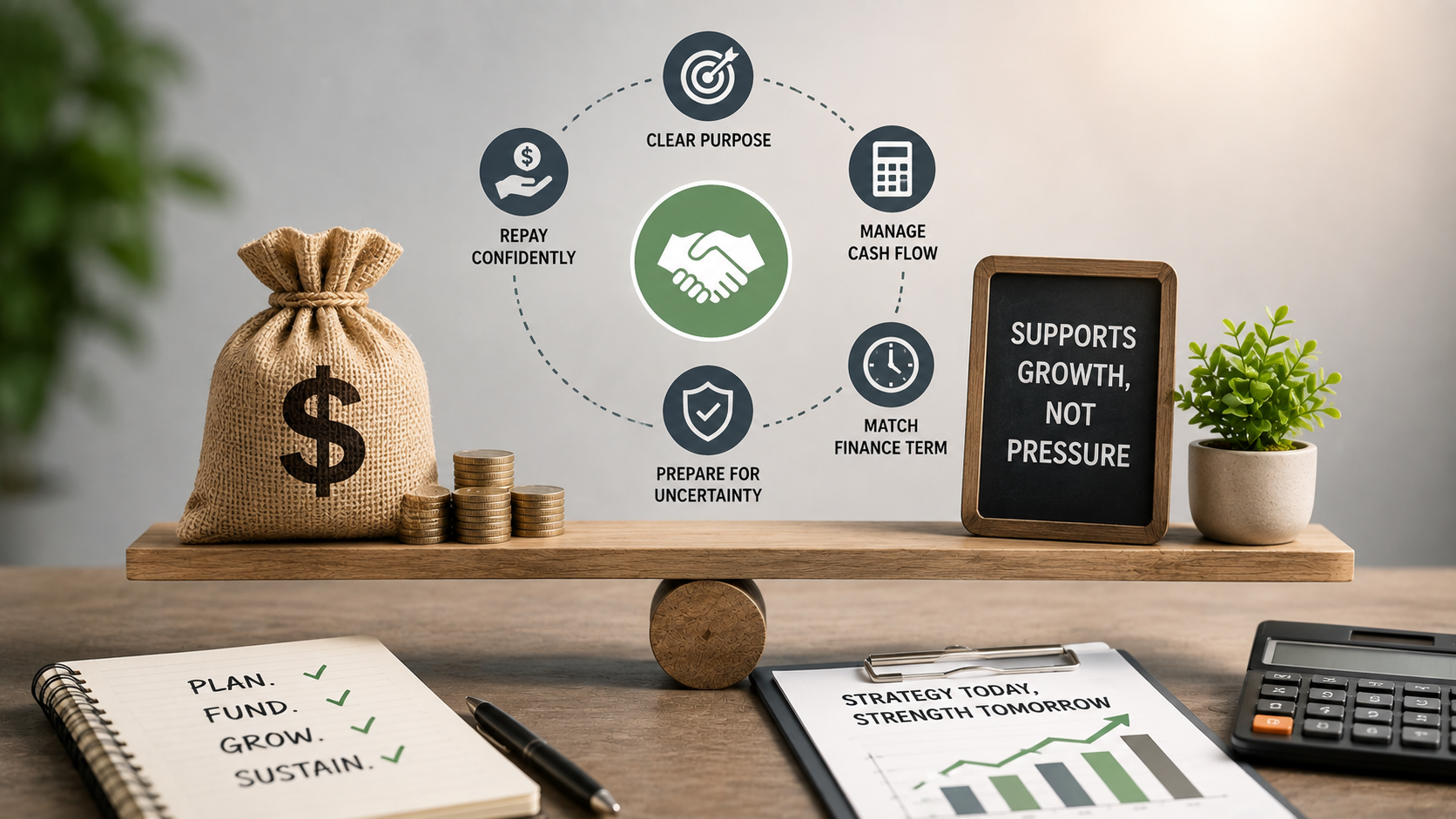
Borrowing can help businesses invest and grow, but additional debt also creates additional commitments.
Before taking finance, business owners should understand:
What is the money being used for?
How will the business repay it?
How will repayments affect monthly cash flow?
Does the finance term match the useful life of what is being funded?
What happens if revenue temporarily declines?
The objective should not simply be obtaining funding.
It should be finding a finance structure that is appropriate for the business's circumstances and objectives.
Build Financial Resilience Before You Need It
Businesses often start thinking about finance when cash becomes tight.
Planning earlier can provide more options.
Maintaining accurate financial records, understanding monthly cash-flow requirements and regularly reviewing existing debt can help owners identify potential pressure before it becomes urgent.
A business-finance review may also help determine whether existing facilities remain appropriate or whether alternative structures should be considered.
The Bottom Line
Australia finished 2025-26 with 2.81 million actively trading businesses, up 3.1% over the year. But beneath that growth was significant movement, with 460,461 businesses entering and 375,331 exiting the market.
The figures are a reminder that entrepreneurship remains strong, but staying financially sustainable requires more than simply generating revenue.
Cash flow, working capital, operating expenses and finance structure can all influence how effectively a business handles challenging periods and growth opportunities.
For business owners, understanding these areas before financial pressure emerges can make planning considerably easier.
At LNO Mortgages, we can help business owners explore suitable business lending options and understand how different finance structures may support their circumstances and objectives.
General information only. This content does not constitute financial, business or credit advice. Lending criteria, fees and individual circumstances apply.
