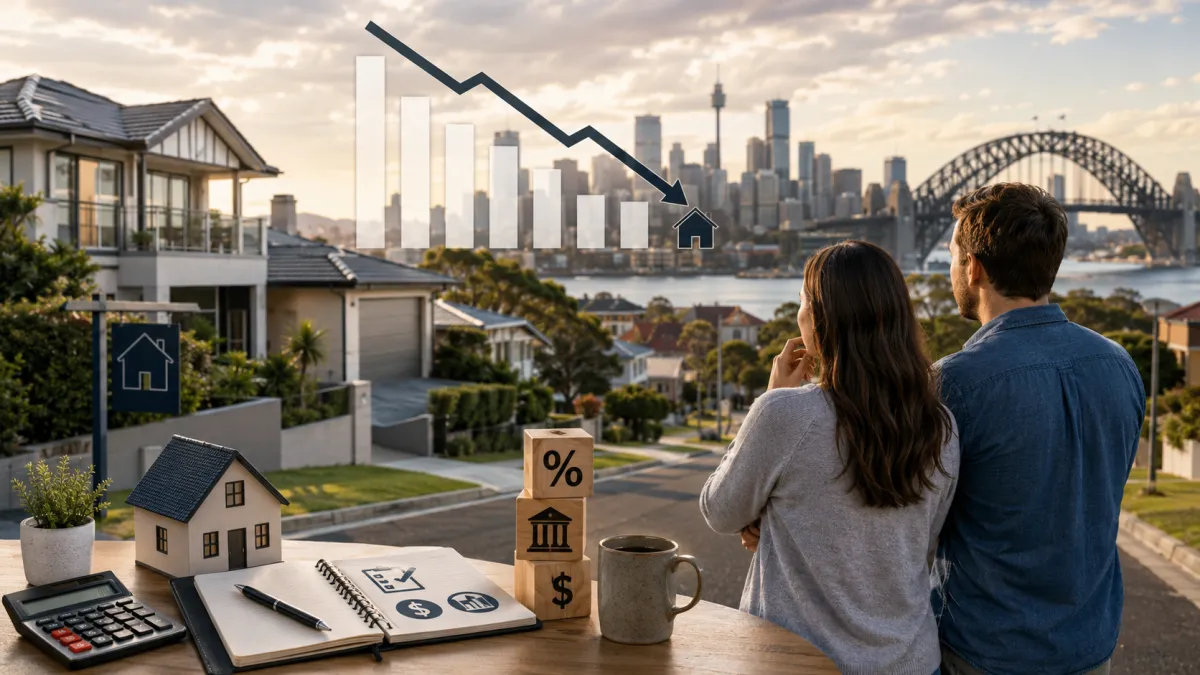
Australia’s Housing Slowdown: What It Means for Home Buyers
Property Prices Are Cooling. Does That Actually Make Buying a Home Easier?
Australia's housing market is losing momentum, and the effects are beginning to spread beyond property prices.
Recent Reuters analysis describes the market as experiencing its sharpest slowdown since the pandemic. Rising borrowing costs, weaker buyer confidence and changes affecting property investors have contributed to fewer mortgage inquiries, softer sales activity and falling prices in major markets.
For prospective buyers, falling property prices might sound like good news. But there is an important question to consider:
Does a cheaper property necessarily mean it has become easier to buy?
Not always.
Australia's Property Market Is Cooling
The slowdown has become particularly noticeable in Sydney and Melbourne. Reuters reported in late July that prices in both cities were down nearly 5% for the year at that point, alongside weaker auction clearance rates, fewer loan inquiries and lower property sales.
Westpac's housing data tells a similar story nationally. Its analysis of the Cotality Home Value Index showed Australian dwelling values falling 0.4% in June after declines in May and April. The cumulative June-quarter decline was 0.7%, the largest quarterly fall since the 2022-23 correction.
The slowdown has also been more pronounced in Sydney and Melbourne, while other capital cities have generally continued to perform more strongly.
This means Australia's property market is not moving uniformly. Conditions can vary considerably depending on the city, suburb, property type and price range.
Higher Borrowing Costs Are Changing Buyer Behaviour

One of the biggest forces behind the slowdown is the cost of borrowing.
Higher interest rates increase mortgage repayments and can reduce how much buyers are able to borrow.
Reuters reported that mortgage inquiries fell 14% in June compared with a year earlier, according to Equifax data. Younger buyers with smaller savings were particularly sensitive to higher borrowing costs.
This creates an important distinction.
Property prices can fall while housing affordability remains challenging.
Imagine a property becomes $30,000 cheaper, but higher interest rates have reduced your borrowing capacity by considerably more than that. The lower purchase price may not necessarily improve your position.
That is why buyers need to consider both sides of the equation: property price and finance affordability.
Could Buyers Have More Negotiating Power?
A softer market can create opportunities.
When fewer buyers are competing for properties, sellers may have to become more realistic about price expectations. Properties may remain on the market longer, and buyers may feel less pressure to make rushed decisions.
Reuters reported falling open-home attendance and declining sales activity, while homes were also taking longer to sell in parts of the market.
For financially prepared buyers, those conditions could provide more room for negotiation.
However, a slower market does not automatically mean every property is a bargain.
Some suburbs may remain highly competitive, particularly where quality housing supply is limited. Buyers should still research comparable sales and understand the local market before making an offer.
The Housing Slowdown Is Reaching the Broader Economy
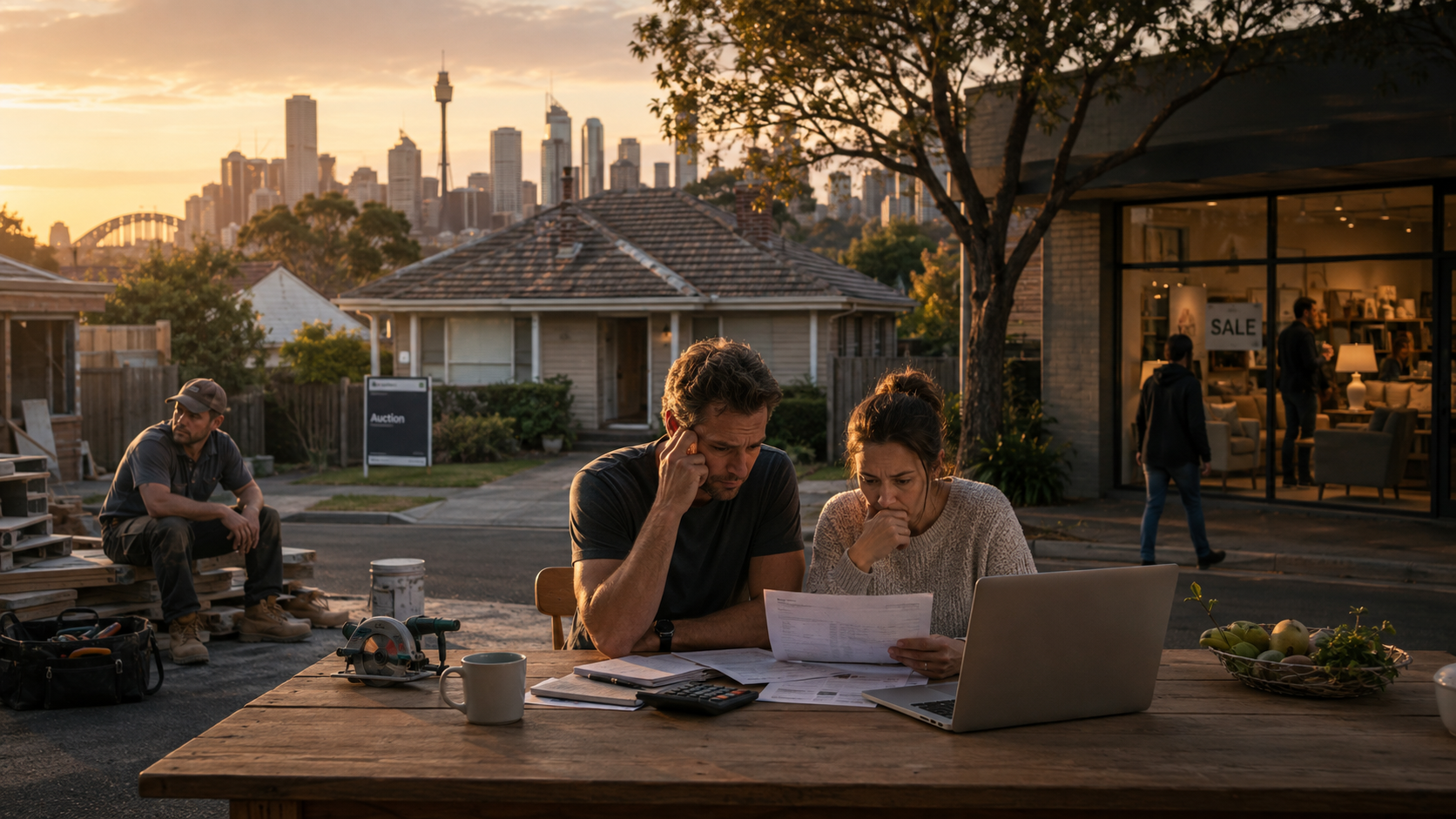
Housing plays a significant role in Australia's economy.
When property activity slows, the impact doesn't stop with homeowners and real estate agents.
Reuters found signs of reduced activity affecting tradespeople, removalists and renovation businesses. One Sydney kitchen renovation business reported customers postponing projects because of uncertainty around interest rates and the property market.
Construction and renovation activity can weaken when households become more cautious.
Consumer spending can also be affected.
Around two-thirds of Australian households own their homes, according to Reuters. When property values rise, homeowners can feel wealthier and more confident about spending. Falling property values can produce the opposite effect.
This is sometimes referred to as the wealth effect.
If homeowners become more cautious, spending on furniture, renovations, appliances, travel and other discretionary purchases may decline.
That can eventually affect businesses, employment and broader economic growth.
Falling Prices Don't Automatically Mean Better Affordability
For buyers, this may be the most important takeaway.
A softer property market can improve negotiating conditions, but affordability depends on much more than the advertised price.
Before purchasing, consider:
Your borrowing capacity
Your deposit and upfront costs
Mortgage repayments at current rates
Potential future repayment changes
Stamp duty and other purchasing expenses
Insurance, rates and ongoing property costs
Your emergency savings after settlement
Reuters noted that research from Cotality indicated higher borrowing costs meant homes had not necessarily become more affordable in Sydney and Melbourne despite falling prices.
That is why getting your finance position clear before making an offer can be particularly valuable in the current market.
Know Your Borrowing Position Before You Buy
If property prices continue to soften, some buyers may find opportunities that were unavailable during stronger market conditions.
But the opportunity only matters if the finance works.
Before beginning a serious property search, a borrowing-capacity assessment can help you understand what lenders may be prepared to offer and what repayments could look like.
It can also help you establish a realistic purchasing range rather than relying solely on property prices.
Different lenders have different assessment criteria, servicing calculations and policies. Your borrowing position with one lender may therefore differ from another.
The Bottom Line
Australia's housing slowdown is becoming increasingly visible.
Prices have weakened, mortgage inquiries have declined and housing activity is beginning to affect industries such as renovations, property services and retail spending.
For buyers, a softer market could mean less competition and greater negotiating power.
But falling prices don't automatically make buying a home easier.
Higher interest rates can reduce borrowing capacity and increase repayments, potentially offsetting some of the benefits of lower property prices.
Instead of focusing only on whether property prices are rising or falling, buyers should understand what they can comfortably afford.
At LNO Mortgages, we can help you assess your borrowing position, compare suitable lending options and understand how different loan structures could work for your circumstances.
General information only. This content does not constitute financial or credit advice. Lending criteria, fees and individual circumstances apply.
